
A reliable timing machine helps you evaluate a mechanical watch’s daily rate, beat error, amplitude, and beat frequency without relying on guesswork. The best compact watch timing machines combine readable displays, stable acoustic pickup, and simple controls in a bench-friendly design.
We’ve gathered 10 options for watchmakers, repairers, collectors, and hobbyists, including multifunction timegraphers with LCD screens, USB connectivity, calibration features, and compatibility with wristwatches or pocket watches.
Page Contents
- Best 10 Compact Watch Timing Machines Picks for 2026
- Accessible Bench Pick – YaeTek NO.1000 Timegrapher
- USB-C Convenience Pick – USB-C Watch Timegrapher
- Coaxial Watch Pick – NO.1900 LCD Timegrapher
- Precision Diagnostics Pick – SWANSOFT No.1000 Timegrapher
- Compact Pocket-Watch Timing Pick – Ewatchparts Timegrapher 1000
- Large-Screen Calibration Pick – No.1900 Watch Tester
- Classic Compact Workshop Pick – No.1000 Timegrapher
- Easy-Start Pick – No.1000 Mechanical Watch Timegrapher
- Data-Transfer Pick – USB/RS232 Adjustable Timegrapher
- Precision Portable Pick – Multifunctional No.1000 Timegrapher
- How We Picked the Best Compact Watch Timing Machines
- Quick Comparison
- Key Buying Factors for Compact Watch Timing Machines
- Who Should Buy Which Compact Watch Timing Machines?
Best 10 Compact Watch Timing Machines Picks for 2026
Accessible Bench Pick
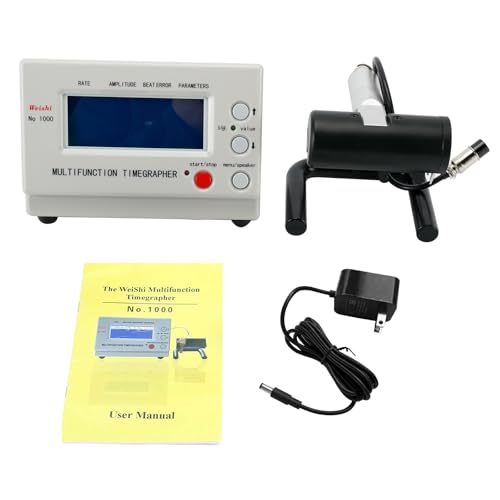
- Measures rate, amplitude, and beat error
- Six positions and 2-60 second sampling
- LCD display with 110V-220V US plug
Best For: Mechanical-watch collectors and hobbyists
USB-C Convenience Pick

- Measures six timing parameters
- Includes a USB Type-C cable
- Noise-reduction cavity and hard-plastic housing
Best For: Amateur users wanting broad movement diagnostics
Coaxial Watch Pick

- Supports mechanical and coaxial watches
- Larger screen than the NO.1000
- 100V-240V input with exchange plugs
Best For: Collectors and watchmakers testing coaxial movements
Precision Diagnostics Pick

- Stated ±0.1 s/d accuracy with 50-sample averaging
- Measures five key timing parameters
- Six positions, live graphs, and 2-60 second sampling
Best For: Watchmakers and advanced mechanical-watch enthusiasts
Compact Pocket-Watch Timing Pick

- Listed for pocket watches
- Multifunction timegrapher design
- Verify size and model before purchase
Best For: Pocket-watch owners and hobbyists
Large-Screen Calibration Pick

- Displays five live timing readings
- Supports coaxial mechanical watches
- Includes one-year warranty
Best For: Collectors, hobbyists, and professional users
Classic Compact Workshop Pick

- Supports mechanical and coaxial watches
- Compact listed dimensions
- Corded electric operation
Best For: Collectors and professional watchmakers
Easy-Start Pick
No.1000 Mechanical Watch Timegrapher
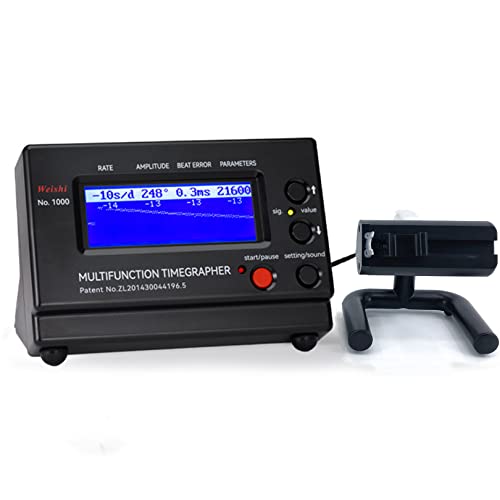
- Displays rate, amplitude, beat error, beat, and lift angle
- Automatically adjusts signal level
- Includes one-year warranty and support
Best For: Collectors, hobbyists, and professional mechanical-watch testing
Data-Transfer Pick
USB/RS232 Adjustable Timegrapher

- Transfers data through USB/RS232
- Adjustable sliding jaws fit various dial sizes
- Lightweight 3.99-ounce design
Best For: Computer-connected calibration and compact workbenches
Precision Portable Pick
Multifunctional No.1000 Timegrapher
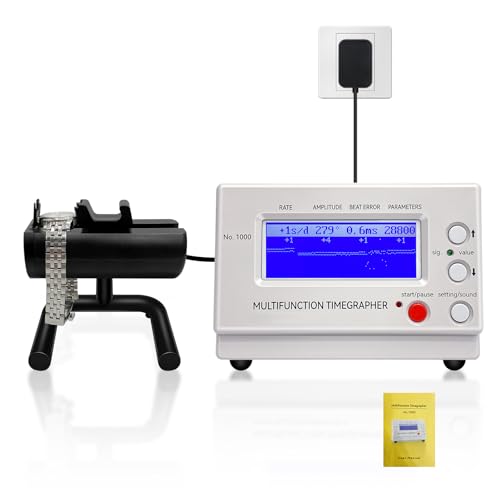
- Measures rate, amplitude, polarity, beat, lift angle, and period
- Supports adjustable sampling and directional measurements
- Portable design with 100V–240V input
Best For: Technicians and enthusiasts needing detailed portable diagnostics
Accessible Bench Pick – YaeTek NO.1000 Timegrapher
For shoppers comparing compact watch timing machines for a mechanical-watch collection, the YaeTek NO.1000 offers a straightforward LCD-based testing setup. It automatically calculates rate, amplitude, and beat error, while its microphone stand and adjustable testing positions support routine checks.
Best For: Collectors and hobbyists who want an easy-to-use mechanical-watch tester with real-time readings.
Pros:
- Displays rate, amplitude, and beat error on an LCD screen.
- Offers six adjustable testing positions.
- Supports selectable sampling periods from 2 to 60 seconds.
- Uses a 110V-220V US plug.
Cons:
- Designed for mechanical watches rather than quartz watches.
- Its listed amplitude level range is 275 to 315, which may not suit every testing need.
- The 3-inch screen is relatively compact.
The YaeTek is a practical entry point for users who value simple controls and visible live readings. Its broad rate-deviation range and sampling options make it useful for basic collection maintenance.
USB-C Convenience Pick – USB-C Watch Timegrapher
DBEIXIWEI Watch Timegrapher with USB Type-C Data Cable Wristwatch Timing Machine Calibration Tool
Check Price On AmazonThis USB-C watch timegrapher is a compact watch timing machine option for amateur users who want several movement measurements in one instrument. Its hard-plastic housing, enclosed noise-reduction cavity, and included USB Type-C cable support a tidy benchtop setup.
Best For: Amateur users seeking measurements for rate, amplitude, beat error, frequency, lift angle, and waveform.
Pros:
- Measures six useful timing and movement parameters.
- Includes a USB Type-C data cable.
- Uses an integrated power amplifier and vibration sensor.
- Enclosed sound-insulation cavity helps reduce testing noise.
Cons:
- The listing provides limited information about sampling periods and testing positions.
- It is not water resistant.
- The model is listed as universal rather than with a specific numbered model.
With broad measurement coverage and USB-C connectivity, this model emphasizes convenience for amateur bench work. Buyers who need detailed specifications on accuracy or position testing should verify those details before purchase.
Coaxial Watch Pick – NO.1900 LCD Timegrapher
OTOOLWORLD New Coaxial MTG Watch Tester Timing Multifunction Timegrapher LCD Screen NO.1900
Check Price On AmazonThe NO.1900 is a compact watch timing machine suited to users who want a larger display and compatibility with both standard mechanical and coaxial watches. Its multifunction design is positioned for watch collectors and professional watchmakers, with flexible power compatibility for several regions.
Best For: Users testing mechanical and coaxial watches who prefer a larger LCD screen.
Pros:
- Works with almost all mechanical watches and coaxial watches.
- Has a larger screen than the NO.1000 model.
- Designed for straightforward operation.
- Supports 100V-240V power with exchange-plug options.
Cons:
- The supplied notes do not specify accuracy, sampling intervals, or measured parameters.
- It is corded electric rather than battery powered.
- Plug compatibility depends on the included regional exchange plug.
The NO.1900 stands out when coaxial-watch support and screen visibility matter more than detailed published specifications. Its wide input-voltage range can also make it convenient for buyers using it across compatible regions.
Precision Diagnostics Pick – SWANSOFT No.1000 Timegrapher
The SWANSOFT No.1000 is a compact watch timing machine aimed at watchmakers, technicians, and serious enthusiasts. It combines multi-parameter analysis with adjustable sampling, six-position testing, timing curves, and a stated accuracy of ±0.1 seconds per day using a 50-sample average.
Best For: Watchmakers and advanced enthusiasts diagnosing mechanical movements with detailed timing data.
Pros:
- Measures rate, amplitude, beat error, lift angle, and displays timing curves.
- Offers six testing positions and 2-60 second sampling cycles.
- Supports a ±999 s/d range and stated ±0.1 s/d accuracy with a 50-sample average.
- Includes a 12-month satisfaction guarantee and support.
Cons:
- Only supports mechanical movements, not quartz watches.
- Its professional feature set may be more than casual collectors need.
- The supplied details describe a plastic case and crystal.
For users who need deeper diagnostics than basic rate checking, the SWANSOFT provides the most detailed measurement set in this group. Its adjustable lift angle and live graphs make it particularly suitable for movement servicing and calibration work.
Compact Pocket-Watch Timing Pick – Ewatchparts Timegrapher 1000
Ewatchparts Watch Timing Machine Multifunction Timegrapher 1000 Compatible With Pocket Watch
Check Price On AmazonIf you need compact watch timing machines for pocket-watch work, this Ewatchparts multifunction timegrapher is a straightforward option to consider. Its compatibility is specifically listed for pocket watches, so measure your watch and verify the model before ordering.
Best For: Pocket-watch owners and hobbyists who need a compatible aftermarket timing machine.
Pros:
- Designed to fit pocket watches.
- Multifunction timegrapher format.
- Compact listed length of 2 inches.
Cons:
- Compatibility and sizing must be verified before purchase.
- Product details do not list display or measurement functions.
- Aftermarket/generic product rather than a factory-branded part.
This is best approached as a compact, compatibility-sensitive choice for pocket-watch users. Confirm the watch’s requirements, size, and model before buying.
Large-Screen Calibration Pick – No.1900 Watch Tester
Among compact watch timing machines, the No.1900 stands out for its larger LCD screen and broad mechanical-watch support. It displays live rate, amplitude, beat error, beat, and lift angle readings, making it useful for adjustment and monitoring.
Best For: Collectors, hobbyists, and professionals who want an easy-to-use tester with a larger digital display.
Pros:
- LCD screen shows rate, amplitude, beat error, beat, and lift angle.
- Works with almost all mechanical watches, including coaxial watches.
- Designed for easy setup and includes a one-year warranty.
Cons:
- Requires AC power.
- It is intended for mechanical watches rather than general watch types.
- The supplied details do not specify physical dimensions.
The No.1900 is a strong choice when readable live measurements matter more than the smallest footprint. Its coaxial compatibility and warranty add practical value for regular workshop or collection use.
Classic Compact Workshop Pick – No.1000 Timegrapher
The No.1000 is a compact watch timing machine built for testing mechanical watches, including coaxial models. Its corded-electric design and compact listed dimensions make it a practical fit for a dedicated bench or watch-collection workspace.
Best For: Watch collectors and professional watchmakers seeking a compact mechanical-watch tester.
Pros:
- Compatible with almost all mechanical watches, including coaxial watches.
- Popular with professional watchmakers and collectors.
- Compact dimensions of 6.77 x 1.57 x 4.49 inches.
Cons:
- Requires corded electric power with a listed minimum operating voltage of 100 volts.
- Supplied details do not mention an LCD screen or specific displayed readings.
- Intended for mechanical watches rather than all watch types.
This model makes sense for buyers who want a compact, established-style tester for mechanical watches and do not need the larger-screen feature described for newer models. Plan for corded operation at the required voltage.
Easy-Start Pick – No.1000 Mechanical Watch Timegrapher
KINSANINC Watch Tester Timegrapher No.1000, Watch Timing Machine Calabration for Mechanical Watches
Check Price On AmazonIf you want compact watch timing machines that are straightforward to operate, this No.1000 timegrapher is a practical choice. Its LCD screen displays rate, amplitude, beat error, beat, and lift angle, while automatic signal adjustment helps simplify testing across different mechanical watches, including coaxial models.
Best For: Watch collectors, hobbyists, and professionals seeking an easy-to-use tester for nearly all mechanical watches.
Pros:
- LCD display shows key timing measurements in real time.
- Ready to use out of the box.
- Automatically adjusts the optimal signal level for different watches.
- Includes a one-year warranty and customer support.
Cons:
- Uses corded electric power, so it is less convenient for mobile testing.
- The supplied details do not specify PC data-transfer capability.
With its simple operation and broad mechanical-watch compatibility, this is a sensible compact timing machine for routine checking and hobbyist work.
Data-Transfer Pick – USB/RS232 Adjustable Timegrapher
Among compact watch timing machines, this lightweight multifunction calibrator stands out for computer connectivity and adjustable positioning. It supports measurements such as daily rate, amplitude, polarization, frequency, and waveform display, while removable sliding jaws accommodate different dial sizes.
Best For: Users who want a small, adjustable tester with USB/RS232 data transfer for desktop or laptop workflows.
Pros:
- Compact dimensions of 3.94 x 2.36 x 1.97 inches and a listed weight of 3.99 ounces.
- Supports USB/RS232 transfer to tablets, laptops, and desktops.
- Adjustable sliding jaws fit various dial sizes.
- Provides multifunction testing and waveform display.
Cons:
- The supplied notes do not state the supported operating systems or software requirements.
- A red power indicator confirms operation but does not replace detailed measurement guidance.
This is a space-saving option for buyers who value adjustable watch placement and the ability to move test data into a computer-based workflow.
Precision Portable Pick – Multifunctional No.1000 Timegrapher
For buyers comparing compact watch timing machines with more detailed specifications, this multifunctional No.1000 tester offers broad diagnostic coverage in a portable format. It measures daily rate, beat, amplitude, polarity, lift angle, and period, with acoustic sensing, adjustable sampling, and a color LCD for real-time readings.
Best For: Watchmakers, technicians, enthusiasts, and makers who need portable testing with detailed mechanical-movement measurements.
Pros:
- Measures key timing metrics, including daily rate, beat amplitude, polarity, beat, lift angle, and period.
- Supports automatic standard-beat detection and manual special-beat selection.
- Offers a 2–60-second sampling period and 1–6 directional measurements.
- Lightweight design, 100V–240V input, and a 365-day warranty support flexible use.
Cons:
- Its broader measurement range may be more than casual users need.
- The supplied details do not mention computer data transfer.
With its extensive measurement controls, stable microphone construction, and wide-voltage input, this model is well suited to a serious, space-conscious workbench.
How We Picked the Best Compact Watch Timing Machines
We focused on the measurements that matter most when regulating or diagnosing mechanical watches: daily rate, amplitude, beat error, beat frequency, and beat numbers. We also considered pickup stability, display readability, control layout, power and data connections, and the machine’s ability to accommodate different case sizes.
Because product listings can use overlapping model names, especially around No. 1000 and No. 1900 timegraphers, compare the exact specifications and included accessories before ordering. A supplied microphone, acoustic rail, USB cable, or compatible power adapter can significantly affect overall value.
Quick Comparison
| Feature | Why It Matters | Best For |
|---|---|---|
| Daily rate | Shows whether the watch runs fast or slow | Routine regulation checks |
| Amplitude | Indicates how strongly the balance is swinging | Movement health checks |
| Beat error | Shows the balance’s timing symmetry | Fine adjustment |
| LCD display | Makes readings easier to view at the bench | Frequent use |
| USB or Type-C connectivity | May simplify power or data transfer | Modern workstations |
Key Buying Factors for Compact Watch Timing Machines
Measurements and Supported Frequencies
Confirm that the machine supports the beat frequencies used by your watches. Common mechanical movements may run at 18,000, 21,600, 28,800, or 36,000 beats per hour. Look for a unit that reports rate, amplitude, and beat error together if you want more than a basic fast-or-slow reading.
Pickup and Noise Control
The acoustic pickup must hold the watch securely and capture a clean signal. A rail-style pickup or adjustable holder can make positioning easier, while a quieter workspace improves measurement consistency. These devices are diagnostic tools, so unstable placement can produce misleading results.
Display, Controls, and Power
Choose a clear screen with straightforward controls if you will use the machine regularly. Check whether it uses mains power, USB, or USB Type-C, and verify that the listing includes the cable or adapter you need. Compact dimensions are useful, but not if the controls or display are difficult to operate.
Watch Compatibility
Most models are aimed at wristwatches, while some listings specifically mention pocket-watch compatibility. Check the holder design and pickup position for larger cases, unusual crowns, or watches with heavy bracelets.
Who Should Buy Which Compact Watch Timing Machines?
Choose a basic No. 1000-style timegrapher if you want an affordable tool for occasional regulation checks. A model with a larger LCD and multiple measurements is better for collectors who routinely assess several watches. USB Type-C connectivity may suit a modern bench setup, while a unit advertised for pocket watches is the safer choice for larger cases.
Professional watchmakers should prioritize repeatable pickup placement, broad beat-frequency support, readable long-session controls, and dependable calibration features over the lowest price. Hobbyists can usually save money with a compact multifunction model, provided it measures the parameters they actually need and includes the required accessories.