
A reliable watch timing machine helps you evaluate a mechanical watch before and after regulation, service, or repair. The right tester can reveal rate variation, beat error, amplitude, and positional differences that are difficult to judge by hand.
These 10 watch timing machines include approachable tools for hobbyists and more capable timegraphers for watchmakers. Use the guide below to compare their features and choose a practical fit for your bench.
Page Contents
- Best 10 Watch Timing Machine Picks for 2026
- Accessible Setup – YaeTek NO.1000 Watch Timing Machine
- Professional Diagnostics – MechanBINGOX Professional Timegrapher
- Compact Classic – NO.1000 Multifunction Timegrapher
- Expanded Readout – No.1900 Watch Timing Machine
- Lightweight Mechanical Tester – MTG-8000 Touch-Button Timegrapher
- Precision Calibration Choice – SWANSOFT No.1000 Timegrapher
- Large-Screen Coaxial Tester – MTG No.1900 LCD Timegrapher
- Easy-Start Pick – No.1000 Watch Tester
- Precision Workbench Pick – Multifunctional Timegrapher
- Beginner-Friendly Value – TICFROG No.1000
- How We Picked These Watch Timing Machines
- Quick Comparison
- Key Buying Factors for a Watch Timing Machine
- Who Should Buy Which Watch Timing Machine?
Best 10 Watch Timing Machine Picks for 2026
Accessible Setup
YaeTek NO.1000 Watch Timing Machine
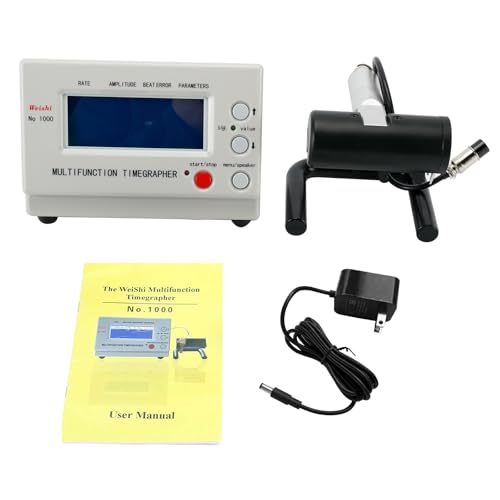
- Measures rate, amplitude, and beat error
- Six positions with 2–60-second sampling
- LCD display with visual timing lines
Best For: Mechanical-watch collectors and hobbyists
Professional Diagnostics
MechanBINGOX Professional Timegrapher

- Displays four key movement measurements
- Tests six watch positions
- Supports 18,000–36,000 BPH
Best For: Watchmakers and serious mechanical-watch collectors
Compact Classic
NO.1000 Multifunction Timegrapher

- Tests almost all mechanical watches
- Works with coaxial watches
- Compact corded-electric design
Best For: Collectors and watchmakers needing a compact tester
Expanded Readout

- Displays five live timing measurements
- Works with coaxial mechanical watches
- Larger LCD and one-year warranty
Best For: Users wanting detailed, easy-to-read movement data
Lightweight Mechanical Tester
MTG-8000 Touch-Button Timegrapher

- Coaxial test method
- Thin, lightweight design
- Multifunction mechanical-watch tester
Best For: Portable routine testing of mechanical watches
Precision Calibration Choice

- ±0.1s/d stated accuracy
- Six-position testing
- Displays rate, amplitude, and beat error
Best For: Detailed mechanical-watch diagnosis and calibration
Large-Screen Coaxial Tester

- Large LCD display
- Designed for coaxial watches
- 100V–240V power support
Best For: Clear viewing and coaxial mechanical-watch testing
Easy-Start Pick
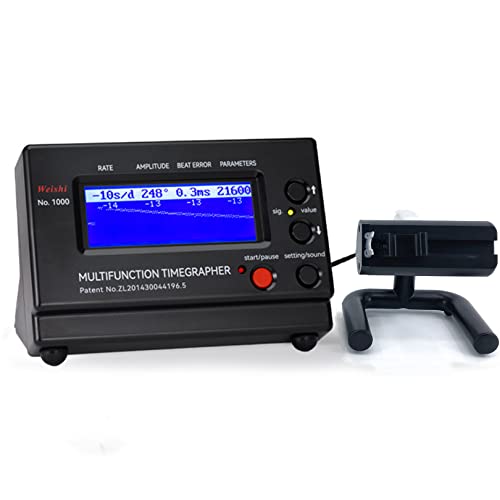
- Live LCD readings for key timing data
- Automatically adjusts signal level
- Works with most mechanical and coaxial watches
Best For: Collectors and hobbyists wanting simple mechanical-watch testing
Precision Workbench Pick
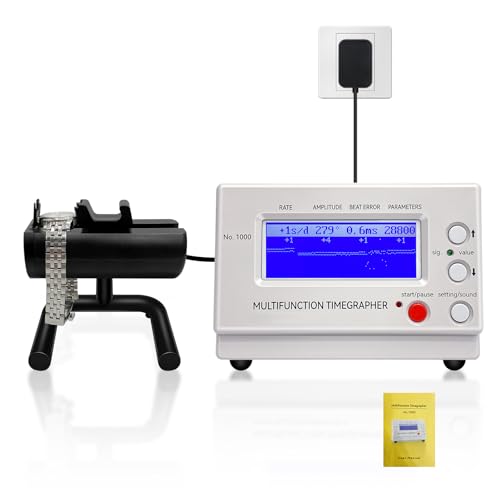
- Measures six key mechanical-watch parameters
- Offers adjustable sampling and directional testing
- Supports wide-voltage input in a compact body
Best For: Watchmakers and enthusiasts needing configurable diagnostics
Beginner-Friendly Value

- Measures beat rate, error, and amplitude
- Shows readings graphically and numerically
- Includes sensor, adapter, manual, and cloth
Best For: Novice watchmakers learning mechanical-watch timing checks
Accessible Setup – YaeTek NO.1000 Watch Timing Machine
The YaeTek NO.1000 is a practical watch timing machine for mechanical-watch collectors who want real-time readings without a complicated setup. It automatically calculates rate, amplitude, and beat error, while its LCD screen and moving timing lines make the results easier to interpret.
Best For: Mechanical-watch collectors and hobbyists seeking adjustable sampling periods and six-position testing.
Pros:
- Measures rate, amplitude, and beat error automatically.
- Offers six testing positions and sampling periods from 2 to 60 seconds.
- LCD screen displays live readings and visual timing curves.
- Includes a 110V–220V US plug.
Cons:
- Designed for mechanical watches rather than quartz models.
- The listed amplitude range is 275–315.
With straightforward operation and flexible sampling options, this watch timing machine is a sensible choice for routine mechanical-watch checks and collection maintenance.
Professional Diagnostics – MechanBINGOX Professional Timegrapher
This professional watch timing machine is built for detailed mechanical-watch evaluation. It shows rate, amplitude, beat error, and timing curves in real time, with six-position testing to help reveal how a movement performs in different orientations.
Best For: Watchmakers, repair shops, collectors, and enthusiasts testing automatic and mechanical watches.
Pros:
- Provides real-time rate, amplitude, beat-error, and curve readings.
- Supports dial-up, dial-down, and four crown-position tests.
- Compatible with common beat frequencies from 18,000 to 36,000 BPH.
- Clear LCD screen supports quick reading of diagnostic data.
Cons:
- Not designed for quartz watches.
- Its professional feature set may be more than casual users need.
For users who want orientation-based testing and broad mechanical-watch frequency compatibility, this timegrapher offers a more diagnostic-focused setup than a basic tester.
Compact Classic – NO.1000 Multifunction Timegrapher
The NO.1000 is a compact watch timing machine intended for testing almost all mechanical watches, including coaxial models. Its corded-electric design and modern compact format make it a straightforward tool for professional watchmakers and watch collectors.
Best For: Users who want a compact, dedicated mechanical-watch timing tester.
Pros:
- Designed for almost all mechanical watches.
- Works with coaxial watches.
- Suitable for both professional watchmakers and collectors.
- Compact dimensions help conserve workspace.
Cons:
- The supplied notes do not specify amplitude, rate, or beat-error display details.
- Requires a corded-electric power source.
This model is a useful choice when compatibility and compact size matter most, although buyers seeking detailed feature specifications may prefer a model with more explicitly listed measurements.
Expanded Readout – No.1900 Watch Timing Machine
The No.1900 is a watch timing machine with a larger LCD screen and a broader displayed readout than the No.1000. It shows live rate, amplitude, beat error, beat, and lift angle data, making it useful for mechanical-watch calibration and routine movement checks.
Best For: Collectors, hobbyists, and professionals who want a larger-screen tester with expanded live measurements.
Pros:
- Displays rate, amplitude, beat error, beat, and lift angle.
- Works with almost all mechanical watches, including coaxial watches.
- Larger screen is described as more precise than the No.1000.
- Designed for easy use and includes a one-year warranty.
Cons:
- Intended for mechanical watches rather than quartz models.
- Uses AC power.
Its expanded measurements and larger display make the No.1900 a strong option for users who want more information at a glance while calibrating or monitoring mechanical movements.
Mechanical Watch Tester Timing Multifunction Timegrapher MTG-8000 touch button
Check Price On AmazonThe MTG-8000 is a practical watch timing machine for testing mechanical watches with a coaxial method. Its thinner, lighter design and touch-button controls make it a straightforward option for routine timing checks.
Best For: Watch enthusiasts and repair benches seeking a compact multifunction tester for mechanical watches.
Pros:
- Coaxial testing method is broadly applicable to mechanical watches.
- Thinner and lighter design than typical timing equipment.
- Multifunction format suits a range of timing checks.
Cons:
- The supplied notes do not specify detailed measurement ranges or display metrics.
- Plastic construction may feel less substantial than metal-bodied equipment.
Choose this watch timing machine if portability and simple operation matter more than extensive published specifications. It is positioned as a current, widely used multifunction option for mechanical-watch testing.
Precision Calibration Choice – SWANSOFT No.1000 Timegrapher
The SWANSOFT No.1000 is a precision-focused watch timing machine for mechanical movements. It combines a color display, timing curves, multiple test positions, and adjustable settings for more detailed diagnosis at the workbench.
Best For: Watchmakers, technicians, and serious collectors who need broad timing data and calibration controls.
Pros:
- Specified accuracy of ±0.1 seconds per day using a 50-sample average.
- Displays rate, amplitude, beat error, lift angle, and timing curves.
- Supports six positions, 2–60-second sampling cycles, and a 30°–70° adjustable lift angle.
- Includes a 12-month satisfaction guarantee and support.
Cons:
- Designed only for mechanical movement watches; it does not support quartz watches.
- Its professional feature set may be more than a casual user needs.
- Plastic case and band materials may not provide a premium bench-tool feel.
For users who want measurable diagnostics rather than a basic timing readout, the No.1000 is the most information-rich option in this group. Its published ranges and multi-parameter display make it well suited to adjustment and troubleshooting work.
Large-Screen Coaxial Tester – MTG No.1900 LCD Timegrapher
OTOOLWORLD New Coaxial MTG Watch Tester Timing Multifunction Timegrapher LCD Screen NO.1900
Check Price On AmazonThe MTG No.1900 is a watch timing machine built around a larger LCD screen and coaxial-watch compatibility. Its broad voltage support and interchangeable regional plug options add practical flexibility for professional or collection-based use.
Best For: Watchmakers and collectors who want an easy-to-view tester for mechanical and coaxial watches.
Pros:
- Larger LCD screen than the No.1000 for easier viewing and operation.
- Works with almost all mechanical watches and handles coaxial watches particularly well.
- Supports 100V–240V power and includes regional mini exchange-plug options.
- Multi-purpose design is suited to professionals and watch collectors.
Cons:
- The supplied notes do not provide accuracy, sampling, or measurement-range specifications.
- Regional plug compatibility may still require selecting the appropriate included adapter.
The No.1900 is a sensible choice when screen visibility and coaxial-watch testing are priorities. It offers useful electrical flexibility, though buyers seeking published precision figures may prefer a model with more detailed specifications.
Easy-Start Pick – No.1000 Watch Tester
KINSANINC Watch Tester Timegrapher No.1000, Watch Timing Machine Calabration for Mechanical Watches
Check Price On AmazonThis watch timing machine is a straightforward choice for collectors, hobbyists, and professionals who want a simple way to check mechanical-watch performance. Its LCD screen displays rate, amplitude, beat error, beat, and lift angle in live digits, while automatic signal adjustment helps simplify testing across different watches.
Best For: Collectors and hobbyists seeking an easy-to-use timegrapher for most mechanical watches, including coaxial models.
Pros:
- Shows rate, amplitude, beat error, beat, and lift angle.
- Automatically adjusts the optimal signal level for different watches.
- Designed for nearly all mechanical watches and can test coaxial watches.
- Includes a one-year warranty and customer support.
Cons:
- It is intended for mechanical watches rather than quartz movements.
- The supplied notes do not identify advanced measurement features beyond the displayed readings.
Choose this model when ease of use and broad mechanical-watch compatibility matter more than an extensive feature set. It is a practical entry point for routine accuracy checks.
Precision Workbench Pick – Multifunctional Timegrapher
For buyers who want a more configurable watch timing machine, this multifunctional timegrapher adds broad measurement coverage and detailed sampling controls. It measures daily rate, beat amplitude, polarity, beat, lift angle, and period, with automatic standard-beat detection plus manual selection for special beats.
Best For: Watchmakers, technicians, makers, and experienced enthusiasts performing detailed mechanical-watch diagnosis and calibration.
Pros:
- Measures daily rate, amplitude, polarity, beat, lift angle, and period.
- Offers 2–60-second sampling periods and one to six directional measurements.
- Provides 0.1 s/d resolution and a 100°–360° beat-amplitude range.
- Supports 100V–240V ±10% input and has a compact, portable design.
Cons:
- Its broader controls may be more than beginners need for basic checks.
- The unit is not water resistant.
Its stronger measurement range, dense sampling, and manual configuration make it the most technically oriented option in this group. The 365-day warranty and included instructions add practical reassurance for regular bench use.
Beginner-Friendly Value – TICFROG No.1000
This watch timing machine is aimed at beginners who want clear information about a mechanical watch’s accuracy. The TICFROG No.1000 measures beat rate, beat error, and amplitude, presenting results graphically and numerically so users can assess whether a timepiece is gaining or losing time.
Best For: Novice watchmakers and owners learning to evaluate mechanical-watch accuracy.
Pros:
- Measures beat rate, beat error, and balance-wheel amplitude.
- Displays results in both graphical and numerical formats.
- Includes a sensor, US adapter, user manual, and cleaning cloth.
- Offers an 18-month satisfaction guarantee with stated 24-hour responses.
Cons:
- Its listed core measurements are narrower than those of the multifunctional model.
- The supplied notes recommend consulting the manual before use.
- It is designed for manual mechanical movements, not quartz watches.
This is a sensible starting point for learning timegrapher basics without an intimidating feature list. Graphical and numerical readings make routine accuracy checks easier to interpret.
How We Picked These Watch Timing Machines
We focused on the measurements and controls that matter during mechanical-watch testing: daily rate, amplitude, beat error, beat frequency, lift angle, positional testing, display clarity, and ease of operation. We also considered whether a unit appears suited to occasional home use, regular hobby work, or a professional watchmaking bench.
Because specifications and included accessories can vary between listings, confirm the current product description before ordering. In particular, check supported beat rates, microphone or sensor design, power requirements, and whether the seller includes a usable stand or holder.
Quick Comparison
| Best For | What to Look For | Typical Priority |
|---|---|---|
| Beginners | Simple controls and a readable LCD | Ease of use |
| Hobbyists | Multiple positions and adjustable settings | Versatility |
| Watchmakers | Stable readings and broad configuration options | Repeatability |
| Frequent calibration work | Durable construction and reliable sensing | Workflow efficiency |
Key Buying Factors for a Watch Timing Machine
Measurements and Supported Movements
At minimum, look for rate, beat error, and amplitude readings. A good Watch Timing Machine should also support the beat frequencies used by the movements you service. A wider frequency range is useful if you work on both vintage and modern watches.
Positional Testing
Testing in several positions helps expose differences that a single dial-up reading can hide. A rotatable holder or clearly defined position settings makes it easier to compare results consistently.
Display and Controls
Readable numbers, clear labels, and responsive controls reduce mistakes during regulation. Touch buttons can be convenient, while physical controls may be preferable when adjusting a watch repeatedly at the bench.
Sensor Stability and Noise Resistance
The microphone or pickup must maintain a clean signal from the movement. A secure holder and a reasonably quiet workspace improve readings, especially when measuring low-amplitude or older movements.
Power, Accessories, and Support
Check whether the tester uses a wall adapter, USB power, or another supply, and verify the plug standard for your region. Included clips, stands, manuals, and replacement sensors can make a meaningful difference in long-term usability.
Who Should Buy Which Watch Timing Machine?
Choose a straightforward LCD model if you are learning regulation or checking a small personal collection. It should provide the core readings without adding controls you will rarely use.
Choose a multifunctional timegrapher with adjustable beat frequency, lift angle, and multiple positions if you service watches as a serious hobby. These controls provide more useful comparisons across different movements.
For professional or frequent bench work, prioritize repeatable sensing, a stable holder, clear simultaneous readings, and dependable construction over the lowest price. Whichever model you choose, use it as a diagnostic aid rather than a substitute for proper service procedures: allow the movement to settle, test consistently, and confirm improvements across multiple positions.